Employee Ambassador Spotlight: Deanna Marshall
Background
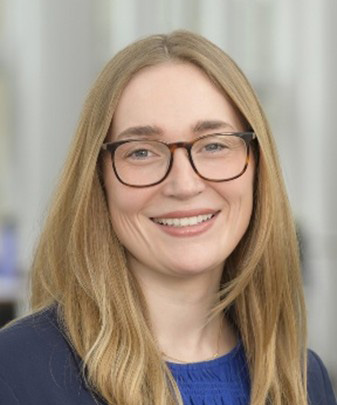
I'm an Associate Director in the Healthcare Quality Improvement Center of Excellence within Merck’s Value and Implementation division. My role focuses on integrating implementation science and health care quality improvement across therapeutic areas, products and regions. I help our company think strategically about how to get the right treatment to the right patient at the right time.
Before joining Merck, I worked in health services research at a children's hospital, where I supported maternal and child health policy and program evaluation. Through that work, I deepened my understanding of the health disparities that affect mothers and children in underserved communities.
I'm the product of a close-knit family, and that sense of connection and care has always guided me. I believe that family is at the heart of who we are and that foundation has shaped everything I do. Today, I call the Philadelphia area home. I have two little kids ages four and one and a half, so I’m very busy with the everyday adventures of parenthood. Being a mother myself has strengthened my commitment to this work and seeing the world through their eyes reminds me why the Merck for Mothers mission to help end preventable maternal mortality matters so much.
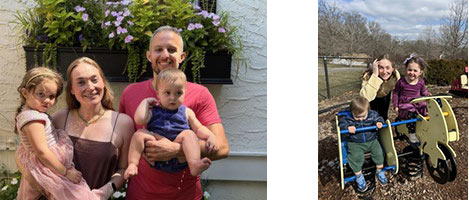
Outside of work, I love to travel. I was in Türkiye recently for a friend's wedding, and I fell in love with the coastal area near the Greek islands. I definitely want to go back as I love anywhere that's warm and tropical!
What first drew you to Merck for Mothers and its mission of advancing maternal health care for all?
My commitment to improving maternal health outcomes and access to health care for all began long before I joined Merck. I started my career as a teacher in low-income communities in New Orleans and Denver through a national public service program. Working in the classroom, I witnessed firsthand the systemic barriers that vulnerable communities face. I saw students whose potential was limited not by their abilities, but by their circumstances. Their families struggled to access resources, support and opportunities that many take for granted. That experience profoundly changed me and taught me that supporting vulnerable communities wasn't just important, it was essential. It sparked a passion in me to understand how these inequities extend beyond education and into health outcomes, a passion that continues to grow every day.
That calling led me to pursue a master's degree in public health from Drexel University, specializing in maternal and child health policy and research. I realized that maternal and child health was the intersection where I could make the greatest impact.
Can you describe the work that you supported through Merck for Mothers and share a success story from a project you’ve worked on that stands out to you?
For the past year, I've been on a short-term assignment with the Social Impact and Sustainability team, providing analytical and program evaluation support for a public-private collaboration with our company’s Merck for Mothers initiative, the U.S. government and nonprofit organizations. Together, we supported the distribution of newborn essential supply kits to new mothers which provided vital resources for both mom and baby shortly after birth. Each kit contains diapers, wipes, infant care products and postpartum necessities for mothers, paired with accessible health information on infant feeding, maternal health warning signs and connections to community resources.
In my role, I analyzed the comprehensive survey data the project team collected from families who received the kits, examining satisfaction levels, favorite items, mental health impact, financial impact and their overall experience. My analysis provided both quantitative insights, such as satisfaction and item preferences, as well as qualitative feedback. Beyond the numbers, I delivered actionable insights that the team could use for continuous program improvement. This data-driven approach helped the program team to refine the program year over year, ensuring the kits evolve based on what families actually need as the program expands.
My evaluation insights and the compelling stories from families were featured in this recent blog post and served as key talking points when the program team met with congressional leadership to educate them about the program and also helped secure federal support to expand the program.
Can you elaborate on the impact of your work with Merck for Mothers and share any learnings from this experience?
Most notably, is how directly the feedback drives decisions about the kits. With each survey iteration, the program team receives specific requests like "we need breast milk bags for pumping" or "we need a thermometer," which are then incorporated into future kits. This creates a continuous feedback loop that translates family needs into immediate program improvements and hopefully better maternal health outcomes.
The satisfaction data is equally compelling. Ninety-nine percent of respondents said they love the kit and would recommend it to other new parents and nearly three-quarters of moms reported that it improved both their financial well-being and anxiety levels. While this isn't a clinical trial or medical intervention, the data clearly demonstrates real impact.
What struck me most was the genuine surprise and gratitude families expressed after receiving the kits. One mother shared that "getting this kit was a complete surprise and an absolute relief. It greatly simplified the mental load I had in getting supplies as a mom to a new baby.” Another shared, “these kits make a huge difference for new parents and are probably one of the best things I have seen in a long time.” Even more fascinating was the data revealing that trust in government increased after receiving the kit.
At a recent roundtable event, community-based organizations shared how they differentiated the kits by including information about local lactation support groups and mental health services, helping connect moms to these resources in their communities. What I found most compelling was that one point of support became a gateway to broader help. When families experience that respect and dignity, they're more likely to engage with additional services during the postpartum period.
What advice or guidance would you give to colleagues who are interested in becoming involved with Merck for Mothers?
The biggest piece of advice that I would give is to take the time to learn about the mission and connect with people who are part of the team. Do not hesitate to get involved, even if you start small. Every single contribution truly makes a difference.
I’ve come to realize that the more you engage in this work, the more inspired you become to do even more.
Is there anything else you would like to share with us today?
Yes, there is. While maternal and infant mortality is a global challenge, the U.S. faces its own crisis, particularly among women of color – regardless of income, education or health care access. Black women are three times more likely to die from pregnancy or childbirth-related complications than white women. These disparities demand our attention and action. I'm grateful that Merck is addressing maternal health globally, while also investing significantly in solutions within the U.S. to protect women and their families during pregnancy and childbirth.
This work is deeply meaningful to me. Knowing that we're working together to help create a world where no woman has to die while giving life fills me with immense pride and gratitude to be part of this extraordinary company.
Who We Are
What We Do
Where We Work
Learn More
Connect
Contact
Terms of Use
Privacy Policy